Grid Resilience: AI-Driven Monitoring for Canada's Transmission Networks
The stability of Canada's national energy grid hinges on the real-time coordination of its vast transmission networks. As renewable integration and demand volatility increase, traditional supervisory control and data acquisition (SCADA) systems are being augmented with AI-driven monitoring layers to predict and mitigate cascading failures.
Architectural Shift: From Reactive to Predictive
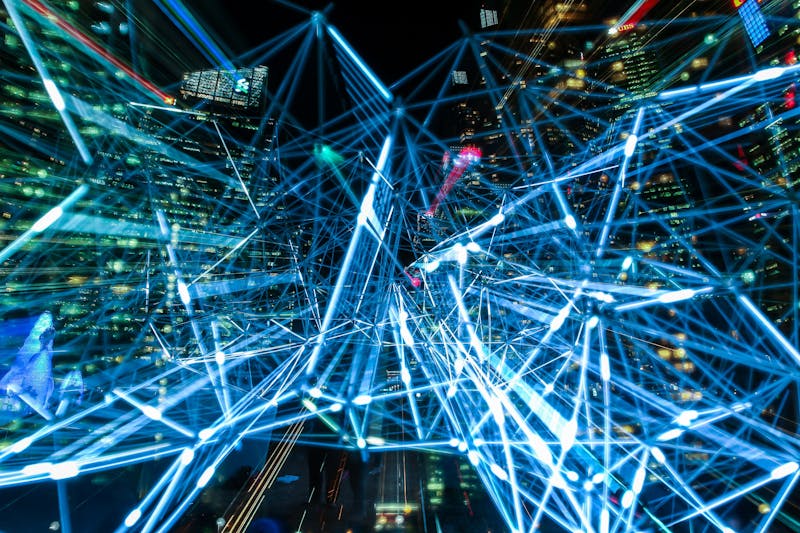
Modern coordination mechanisms involve a multi-layered digital architecture. At the foundational layer, phasor measurement units (PMUs) provide high-fidelity, time-synchronized data streams. The novel development is the intermediate AI analytics layer, which processes this data to model grid stress points up to 48 hours in advance.
This predictive capability is critical for Canada's geographically dispersed infrastructure, where weather events in one province can impact transmission corridors thousands of kilometers away. The AI models are trained on historical fault data, weather patterns, and real-time load flows to identify subtle anomalies that precede major disruptions.
Institutional Interfaces and Data Governance
A significant challenge lies not in the technology itself, but in the institutional interfaces. Coordination between provincial system operators (like the IESO and AESO), the federal regulator, and private transmission asset owners requires standardized data protocols. The platform facilitates a secure, federated data exchange where operational insights are shared without compromising proprietary or security-sensitive information.
The AI acts as a neutral arbiter, providing dispatch recommendations based purely on system-wide resilience metrics rather than regional or commercial interests. This has proven essential during the 2025 winter peak, where the system successfully rerouted power from surplus hydro regions in Quebec to address a generation shortfall in Ontario, preventing controlled outages.
Future-Proofing Through Adaptive Logic
The next phase involves implementing adaptive dispatching logic. Instead of static rule-based systems, machine learning algorithms will continuously optimize switching schedules and voltage regulation setpoints. This "self-healing grid" concept aims to autonomously isolate faults and reconfigure network topology within milliseconds, a task impossible for human operators.
Pilot projects in Alberta and British Columbia are testing these algorithms on microgrid segments, with early results showing a 40% reduction in outage duration for localized faults. The key to scaling this nationally is ensuring the AI's decision-making process remains transparent and auditable for regulatory compliance.
In conclusion, the digital coordination of Canada's energy infrastructure is evolving from simple monitoring to an intelligent, predictive nervous system. The integration of AI into daily operations is not about replacing human expertise, but about providing system operators with the foresight and tools to maintain reliability in an increasingly complex energy landscape.